
Understanding what happens during in-home pet euthanasia can help families feel more prepared and less anxious about the process. From the veterinarian’s arrival to aftercare planning, each step is designed to provide a peaceful, compassionate, and dignified farewell for both pets and their loved ones.
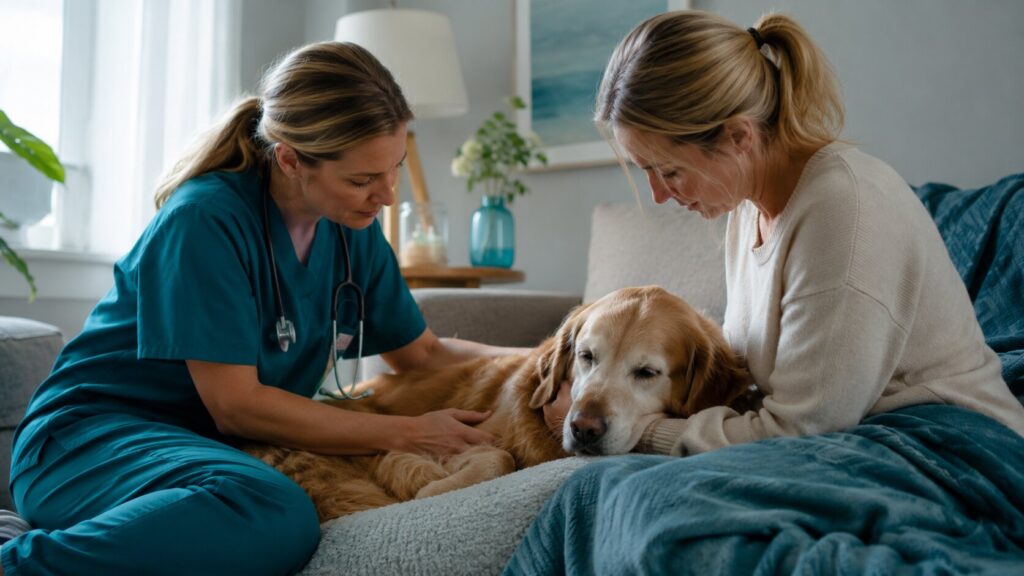
Saying goodbye to a beloved pet is one of the most emotional decisions any family can face. Choosing in-home euthanasia allows that farewell to happen in a familiar, peaceful environment where a pet can remain comfortable and surrounded by the people who love them most. Understanding what happens during in-home pet euthanasia can ease uncertainty, reduce anxiety, and help families prepare emotionally and practically for the experience. While every veterinarian has their own approach, the overall process is designed to prioritize comfort, dignity, and compassion at every stage.
Selecting an in-home euthanasia veterinarian is about more than comparing services or pricing. It is about finding someone who understands the emotional significance of the visit while providing skilled medical care. The best providers create an environment where families feel informed, supported, and never rushed through one of life’s most difficult experiences.
The veterinarian you choose will guide your family through one of the most emotional days of your pet’s life. Their ability to communicate calmly, explain each step, and provide reassurance often shapes how families remember the experience for years afterward.
An experienced veterinarian understands that every family grieves differently. Some people appreciate detailed explanations, while others simply want quiet reassurance. A compassionate provider adapts to these preferences without making assumptions.
Medical knowledge is only one part of quality end-of-life care. Emotional intelligence, patience, and respect for both the pet and the family are equally important qualities that distinguish exceptional in-home euthanasia providers.
One of the first considerations is the veterinarian’s experience with in-home euthanasia rather than general veterinary practice alone. While many veterinarians are highly skilled clinicians, providing peaceful end-of-life care in a family’s home requires additional experience and sensitivity.
Ask how frequently the veterinarian performs in-home euthanasia appointments. A provider who regularly offers this service has likely refined both their medical protocols and their communication style to make the experience as comfortable as possible.
Experience also means recognizing the unexpected. Pets with advanced illness, mobility limitations, anxiety, or chronic pain may require individualized approaches. An experienced veterinarian can adapt the appointment based on the pet’s condition while maintaining a calm environment.
Providers such as Shay Shay Veterinary Mobile dedicate significant attention to creating thoughtful in-home experiences, recognizing that compassionate communication is as important as the medical procedure itself.
Professional qualifications are essential, but they do not tell the entire story. A veterinarian may have excellent credentials while still approaching appointments in a way that does not fit your family’s expectations.
Pay attention to how the veterinarian communicates during your first conversation. Do they answer questions patiently? Do they explain the process clearly without overwhelming you with medical terminology? Do they encourage discussion rather than rushing to schedule the appointment?
Small interactions often reveal a great deal about how the visit itself will unfold. Feeling heard and respected before the appointment usually indicates that you will receive the same thoughtful care during the visit.
Trust is built through communication long before the veterinarian arrives at your home.
Preparing questions in advance can make your decision easier while ensuring you receive consistent information from different providers.
Useful questions include:
These conversations provide more than factual answers. They also reveal how comfortable the veterinarian is discussing difficult topics with empathy and clarity.
A provider who welcomes questions without making you feel rushed often demonstrates the same level of patience throughout the appointment itself.
Not every veterinary practice follows the exact same protocol. Understanding how each provider approaches the appointment helps ensure there are no unexpected surprises on the day of the visit.
Many veterinarians begin with a conversation before administering any medication. This allows families to ask final questions, review aftercare decisions, and spend meaningful time with their pet.
Sedation is another important topic. Most modern in-home euthanasia providers administer a sedative first, allowing the pet to relax and fall into a comfortable sleep before the final medication is given. Families often find this approach reassuring because it creates a peaceful transition.
Ask whether the veterinarian explains each stage during the appointment or prefers a quieter approach. Some families appreciate detailed guidance, while others prefer fewer verbal interruptions during such an emotional moment.
Excellent communication begins well before the scheduled visit.
Notice whether phone calls or emails are answered promptly and respectfully. Clear communication regarding scheduling, pricing, aftercare, and expectations demonstrates professionalism while reducing unnecessary stress.
Compassionate providers also understand that families may need to reschedule if their pet’s condition changes or if they need additional time to make their decision. Flexibility and understanding are valuable indicators of patient-centered care.
Some practices also provide written information beforehand, allowing families to review the process at their own pace. This helps reduce uncertainty while ensuring everyone understands what to expect.
Timing can be an important consideration when choosing an in-home euthanasia veterinarian. While no one wants to make urgent decisions, pets sometimes experience sudden changes in their quality of life.
Ask about scheduling availability, weekend appointments, holiday services, and emergency accommodations. Although availability alone should not determine your choice, understanding the provider’s scheduling policies helps avoid unnecessary stress later.
Geographic coverage also matters. Some veterinarians serve only specific communities, while others travel across larger service areas. Confirming this early prevents disappointment if your home falls outside their coverage area.
Practices that specialize in mobile veterinary services often have clearly defined service regions and travel policies, making expectations transparent from the beginning.
Online reviews can provide useful insight, but they should be interpreted thoughtfully.
Instead of focusing solely on star ratings, read detailed comments describing the veterinarian’s communication, compassion, professionalism, and willingness to support families during emotional situations.
Patterns are more informative than individual opinions. If many reviews consistently mention patience, kindness, and respectful care, those qualities are likely part of the practice’s overall approach.
Personal recommendations from friends, family members, or your regular veterinarian can also be valuable. These referrals often include details that are difficult to capture in online reviews.
Aftercare is an important part of the overall experience and deserves careful consideration before scheduling.
Some practices coordinate directly with trusted cremation providers, while others offer multiple memorial options such as private cremation, communal cremation, clay paw prints, fur clippings, or memorial jewelry.
Understanding these services in advance allows families to make thoughtful decisions without feeling pressured during an emotional appointment.
Practices like Shay Shay Veterinary Mobile often explain aftercare options during the scheduling process, giving families time to consider what feels most meaningful rather than making immediate decisions while grieving.
Transparency regarding aftercare logistics is another sign of an organized and compassionate provider.
Compassion is demonstrated through actions rather than marketing language.
A veterinarian who allows families adequate time before and after the procedure, answers difficult questions honestly, and never pressures anyone into immediate decisions often creates a more supportive experience.
Look for providers who personalize appointments rather than following a rigid script. Every pet has a unique personality, and every family’s goodbye will naturally be different.
Simple gestures also matter. Respectfully speaking to the pet by name, acknowledging family members’ emotions, and creating an unhurried atmosphere often leave lasting positive impressions despite the sadness of the occasion.
Compassion cannot eliminate grief, but it can make the experience gentler and more meaningful.
Cost is understandably part of the decision-making process, but it should rarely be the only consideration.
In-home euthanasia services may include travel, extended appointment times, sedation, euthanasia medications, aftercare coordination, and memorial keepsakes. Comparing prices without understanding what is included can lead to inaccurate conclusions.
Request an itemized explanation of fees whenever possible. Transparent pricing helps families understand the value of the services being provided and reduces unexpected expenses later.
Choosing the least expensive option may not always provide the experience your family hopes for. Likewise, the most expensive provider is not automatically the best. Evaluating the complete experience rather than price alone often leads to a better decision.
After selecting your veterinarian, preparation becomes much easier because expectations are clear.
Confirm the appointment time, discuss your preferred location within the home, and decide who will be present. Gather any favorite blankets, toys, or treats your pet enjoys if appropriate.
If children or additional family members will participate, explain the process beforehand using honest, age-appropriate language. This helps everyone feel emotionally prepared while reducing uncertainty.
It is also helpful to review aftercare decisions one final time so that practical matters have already been addressed before the appointment begins. This allows the focus to remain on spending meaningful time with your pet.
Choosing a veterinarian you trust provides peace of mind, allowing your attention to stay where it belongs: with your beloved companion during their final moments.
“The right veterinarian cannot remove the sadness of saying goodbye, but they can make every final moment peaceful, compassionate, and filled with dignity.”